
HAIR STEM CELL TRANSPLANTATION
There are different hair transplantation techniques. Each of them can be performed in various international locations. The cost of these procedures depends on many factors, including the personnel performing them, the country’s health regulations, and the safety of the procedure: every potential patient therefore has the possibility, when informed, to choose the technique, the country of execution, and to understand what the higher or lower price they decide to pay corresponds to in terms of results and risks.
 |
 |
 |
FUT (Follicular Unit Transplantation)
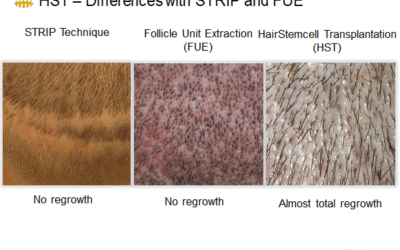
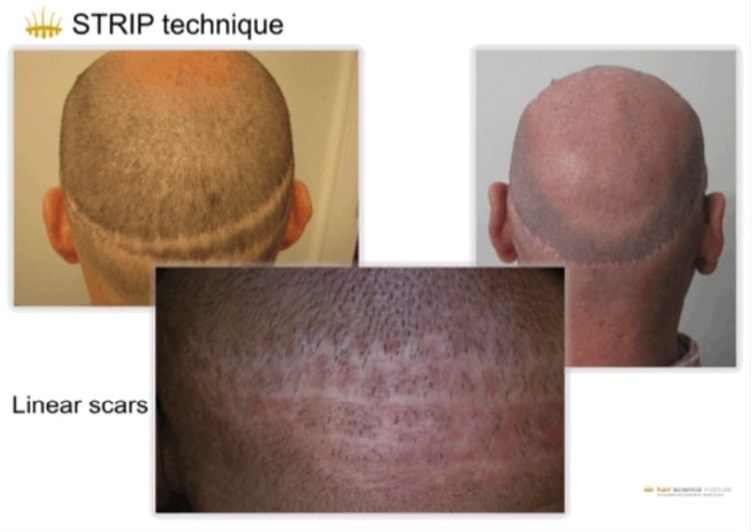
Involves surgically removing a strip of scalp (STRIP) from the donor area, which is then sutured. This creates a scar in the donor area that remains noticeable if the hair is worn short. This technique must be performed by experienced surgeons to be effective, but it is costly because operating rooms and surgical staff are expensive. It is not accessible to all practitioners and is a true surgical operation.
FUE (Follicular Unit Extraction)
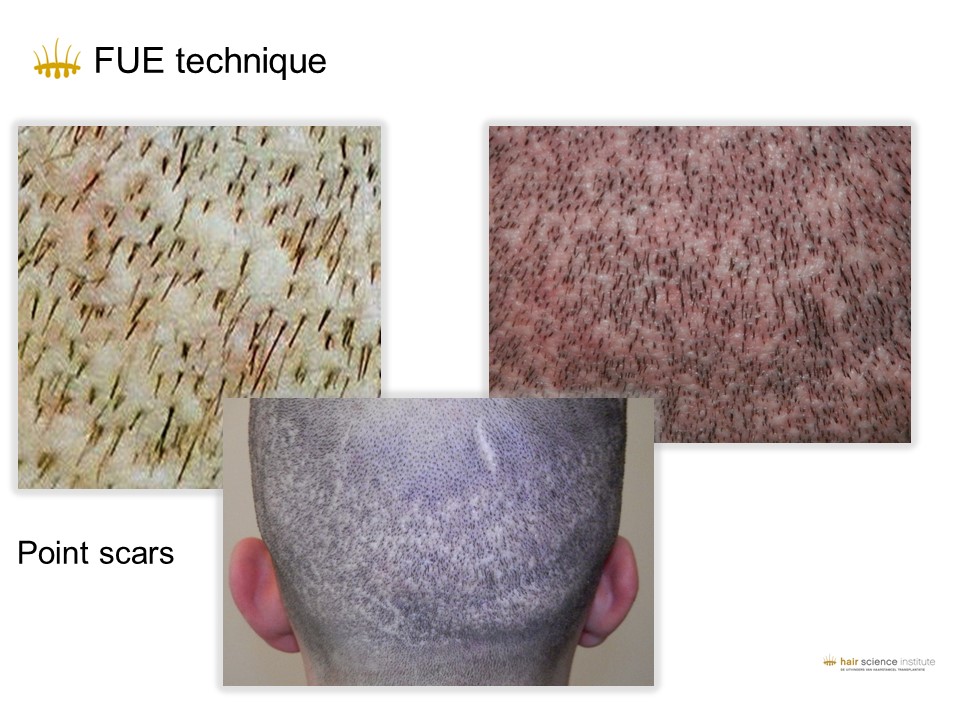
Involves harvesting individual follicular units from the donor area using circular needles ranging from over one millimeter to a minimum of 0.8 millimeters. This extraction can be done manually or with robotic units. Depending on the needle diameter used, there may be damage to the harvested follicular units or to adjacent units.
This significantly affects the regrowth rates of transplanted hair. Each extraction point leaves a small scar. The collection of all these scars can create scalp fibrosis, causing hardening and limiting the possibility of subsequent procedures. Practitioners of this technique are often beginner doctors or even less qualified staff.
Regulations vary between countries, creating a substantial difference in operator types: in Switzerland, only qualified medical or nursing staff can perform the procedure. Abroad, for example in Turkey, regulations are much less strict, meaning unqualified operators and unsuitable facilities can perform the procedure. Patients choosing interventions in countries without strict health regulations must be aware of the increased risks. Given this, it is understandable that the cost of such procedures is lower than FUT. However, in foreign countries with less rigorous health regulations, such as Turkey, procedures performed in uncontrolled facilities by unqualified technicians may seem very competitive to uninformed patients.
HST (Hair Stem Cell Transplantation), also called PL-FUT (Partial Longitudinal Follicular Unit Transplantation)
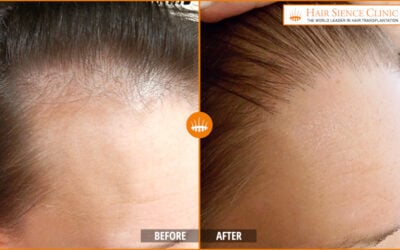
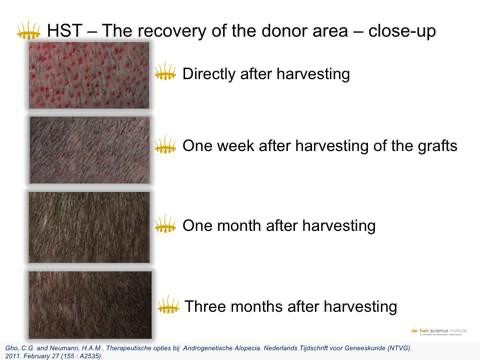
Is an innovative and patented technique involving partial extraction of the hair bulb using extremely small, specially designed surgical instruments, measuring 0.5–0.6 mm. The partial extraction is virtually free of epidermal tissue, and the stem cells for regrowth are present in both the extracted portion and the part left in situ. The portion of the bulb that was not removed regenerates the same type of hair within a few months.
The extracted portion exposes the hair stem cells to the environment and is then immersed in a patented medicinal complex, which ensures their survival. This patented medium, which includes exosomes among other components, provides the extracted graft with the strength and energy needed to survive and root in the recipient area, with a survival rate of 95–98%.
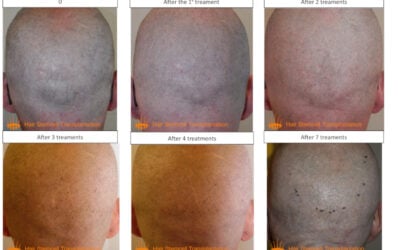
This technique is the only one that guarantees regrowth and regeneration of the donor area, allowing successive procedures at a few months’ interval without causing any of the damage FUT and FUE procedures inflict on donor zones. It is available in Italy, Switzerland, and other European countries with strict health regulations governing both operators and facilities.
International Society of Hair Restoration advises caution regarding foreign clinics
Potential patients are advised that the IHRS (International Society of Hair Restoration), the leading international association for hair transplantation, has issued a statement recommending extreme caution before relying on low-cost foreign clinics, particularly in Turkey.
In Turkey, there are about a thousand establishments dedicated to hair transplantation, but only around thirty surgeons specialized in this field. This clearly means that the vast majority of these Turkish clinics are operated by non-medical technical staff, which may lead to undesirable consequences.
HST Patient-Specific Hairline
In countries like Italy and Switzerland, the qualifications and experience of the surgeon are available and accessible to potential patients. The aesthetic expertise of these doctors ensures a hairline design adapted to the patient’s ethnic type. In contrast, patients undergoing hair transplantation in Turkey often receive a “Turkish-style” hairline that does not conform to the aesthetic standards of other populations.
Lack of medical team references abroad
Abroad, particularly in Turkey, references for the person performing the procedure are not available until the day of the intervention. This is important because poorly executed transplants (e.g., scalp necrosis or excessive follicular unit extraction) can compromise the outcome and limit the possibility of subsequent procedures if needed.
Furthermore, in the unfortunate case of complications, it is not always possible to recover from a poorly performed hair transplant.
Absence of periodic follow-ups abroad
It should also be remembered that achieving the best results requires monitoring progress over time, starting from the pre-transplant period to determine the real causes of hair loss and its potential evolution. Post-operative follow-ups are equally important for a satisfactory result. Not having to travel abroad is an additional advantage for regular check-ups.