
Interest in advanced hair restoration treatments continues to grow, and with good reason. One solution attracting particular attention is the HST (Hair Stem Cell Transplantation) technique. Unlike traditional methods, HST stands out for its innovative process, designed to deliver discreet, long-lasting results. This article explains how the HST method works step by step, what sets it apart from other procedures, and why many patients choose it today.
What distinguishes the HST technique from classic procedures?
The HST technique belongs to a new generation of minimally invasive hair restoration solutions. Earlier methods such as FUE (Follicular Unit Extraction) and FUT (Follicular Unit Transplantation) move entire follicular units, whereas HST uses partial follicular extraction. For those interested in the scientific basis of this technique, several scientific studies on PubMed provide useful insights. This key difference helps preserve the donor area while creating a natural appearance in the recipient area.
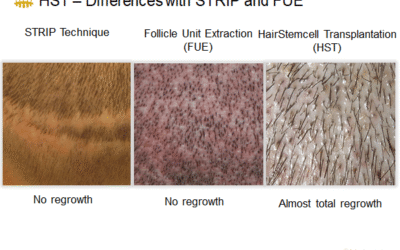
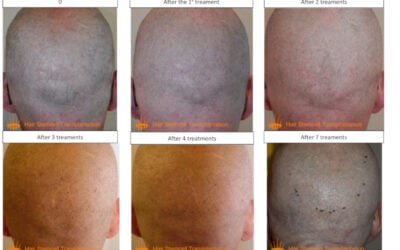
A defining feature of HST is that hair can regrow not only where it has been transplanted, but also in the donor area, because part of the stem-cell-rich tissue is left in place during extraction. This approach supports natural density and greatly reduces the visible scarring or unnatural patterns sometimes seen with older techniques.
A detailed walkthrough of the HST process
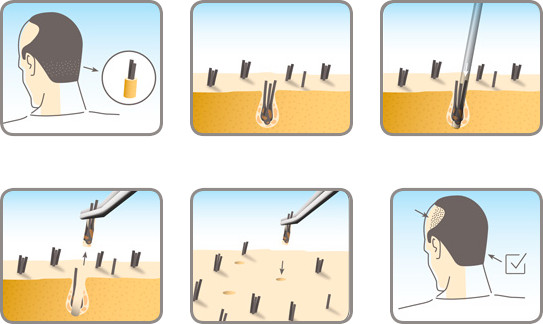
An HST treatment involves several carefully coordinated stages, tailored to each patient. Each stage prioritizes comfort, safety and personalization. Here is how the process typically unfolds:
- Initial consultation and personalized planning
- Natural-looking design of the hairline
- Local anesthesia for comfort
- Microsurgical extraction of stem-cell-rich follicle segments
- Careful graft preparation and selection
- Precise implantation following the natural direction of hair growth
- Clear aftercare instructions and ongoing follow-up
Consultation and planning: the foundation of a successful result
Every successful restoration starts with a thorough evaluation. You discuss your goals and expectations, while the doctor assesses your hair loss pattern, existing density and the condition of your donor area. If you are considering this procedure, you can book a personalized consultation to explore your options.
This preparatory phase leads to a personalized plan: the number of grafts, where they will be placed and the density that can realistically be achieved. If you have any questions beforehand, feel free to contact our team.
Extraction and preparation: harnessing regenerative potential
Local anesthesia is administered to keep you comfortable throughout the procedure. The defining moment of HST is the extraction: using very fine needles of just 0.6 mm in diameter, smaller than the follicular units themselves, the surgeon removes only a portion of each follicular unit rather than the whole unit. Because part of the structure remains in the donor area, it can regenerate naturally.
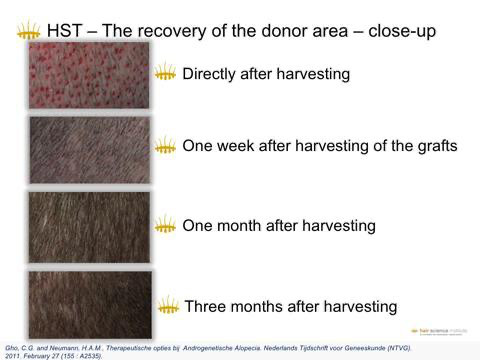
After extraction, each graft is handled with great care. Only grafts that meet strict quality criteria are prepared for implantation, to give the best possible chance of success in the treated area.
Implantation and aftercare: aiming for a natural result
The final stage consists of placing each graft according to the planned pattern, angle and direction of growth. Implantation is carried out with even finer needles, 0.5 mm in diameter, which allows grafts to be placed very close together. This precision is essential for a natural look, especially along the hairline.
You then receive detailed aftercare instructions, covering how to wash your hair, any treatment prescribed by your doctor and what changes to expect over the following months. Follow-up appointments make it possible to monitor progress throughout the recovery period.
Long-term advantages and scientific background
HST offers several advantages over older approaches. Thanks to partial extraction and the regeneration of the donor area, patients benefit from fuller-looking results with a much lower risk of depleting their donor area.
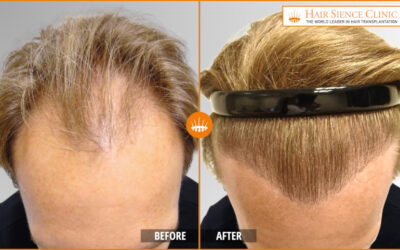
In addition, HST procedures aim for particularly natural hairlines. Angle, direction and density are designed to mirror the original hair, so that even short hairstyles look natural. The PL-FUT technique on which HST is based has been described in peer-reviewed publications.
How do growth cycles affect the post-op period?
Newly implanted grafts go through an adaptation period after the procedure. During the first few months, changes are often subtle: transplanted hair may shed before growing back stronger. Over time, density gradually increases and coverage becomes more even.
Patience is therefore important. The result develops over several months, and in the donor area, regeneration follows the natural hair growth cycle of around nine months. Regular follow-up appointments answer your questions at each stage.
Frequently asked questions about HST hair transplantation
How soon are results visible after an HST hair transplant?
First changes usually become noticeable within a few months. Transplanted hair generally goes through a resting phase before regrowth begins. The final result typically develops over 9 to 12 months.
- Early shedding is common before new growth appears
- Hair gradually thickens over the following months
- Follow-up appointments track your progress
Is scarring visible after an HST procedure?
The HST approach is minimally invasive. Scarring in the donor area is minimal because only small portions of follicular units are extracted with very fine needles, and the donor area regenerates.
| Technique | Donor area scarring |
|---|---|
| FUT | Linear scar, sometimes visible |
| FUE | Small dotted scars, visible with very short hair |
| HST | Minimal and very discreet |
Can HST be combined with other hair loss treatments?
In some cases, a complementary treatment can help slow further hair loss around the transplanted area. Your doctor will discuss with you whether this is appropriate for your situation.
- Advice tailored to the type and progression of your hair loss
- Personalized aftercare to protect your result
- Follow-up appointments to adjust recommendations if needed
What makes HST different from standard FUE and FUT techniques?
Standard FUE and FUT remove entire follicular units from the donor area, which can make thinning more visible. HST extracts only portions of follicular units, leaving part of each unit in place. This preserves the appearance of the donor area and allows hair to regrow where grafts were taken.
- The donor area regenerates
- Grafts can be placed very close together for high density
- Results blend naturally with surrounding hair
| Factor | FUE/FUT | HST |
|---|---|---|
| Donor area | Follicles permanently removed | Regenerates |
| Visibility of scarring | Moderate to high | Very low |