
Hair restoration has made great progress in recent years, with techniques designed to deliver natural-looking results while limiting trauma to the scalp. Two well-known methods are Follicular Unit Extraction (FUE) and Hair Stem Cell Transplantation (HST), known in the scientific literature as PL-FUT. For anyone considering a hair transplant, the main questions concern scarring, regrowth, density and the long-term health of the donor area. Understanding these points is essential before choosing the technique that best matches your expectations.
Understanding FUE and HST
Both FUE and HST aim to move hair follicles from a donor area, usually at the back or sides of the head, to thinning or balding areas. However, their approach to extraction and implantation differs significantly, which gives each method its own advantages and limitations. The partial extraction principle used in HST has been described in several scientific studies on PubMed.
Both techniques are minimally invasive, performed under local anesthesia and involve a relatively short recovery, but they do not lead to the same outcome. The differences in donor area preservation and overall appearance can be considerable. Understanding how each technique works helps you make a choice that fits your long-term goals. If you would like to discuss your options in detail, you can book a personalized consultation.
How does FUE affect the donor and recipient areas?
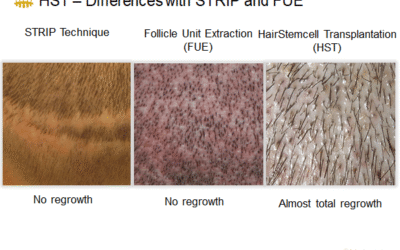
FUE extracts entire follicular units from the donor area using small punches. Because the whole unit is removed, nothing remains to grow back at that spot, which gradually reduces donor density. This is particularly important for patients who may need further transplants in the future.
Each extraction also leaves a small micro-scar. Individually, these marks are tiny, but after extensive harvesting they can change the texture and density of the donor area, which may then look dotted or thinner. These changes are not always visible at first and can become apparent months later, especially if coverage is insufficient and further harvesting is no longer possible.
Who may consider FUE?
FUE is a widely available, recognized technique that can give good results in suitable cases, for example for modest corrections in patients with a good donor reserve. It is offered by many clinics. Patients should nevertheless consider the risk of permanent donor thinning, possible hardening of the scalp tissue after many extractions, and fewer options for future procedures.
For patients looking for an established surgical method, FUE can be appropriate, provided the expected appearance of the donor area after the procedure and the possibilities for future sessions are clearly explained.
What are the main limitations of FUE?
The main limitations of FUE are the permanent loss of follicles in the donor area and the many micro-scars it leaves. These can limit future touch-ups and affect the texture and flexibility of the scalp. It is important to discuss these points thoroughly before choosing this method.
In addition, if the recipient area still lacks volume after the procedure, a depleted donor area may not be able to provide enough follicles for a further session.
What sets HST apart in restoring hair and preserving the donor area?
HST uses a regenerative approach: it extracts only part of each follicular unit, using very fine needles of just 0.6 mm in diameter, and leaves the rest, including stem cells, in the donor area. This allows the donor area to grow back, so hair can be restored without permanently depleting the donor supply.
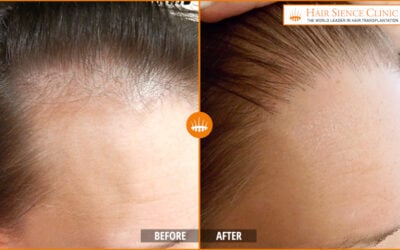
The portion transplanted into the recipient area grows new hair like a conventional graft. Thanks to this precise division and very fine instruments, HST allows high-density implantation with minimal scarring, including in delicate areas such as the hairline. The donor area generally shows very few signs of the procedure once healed.
The advantages of HST for preserving the donor area
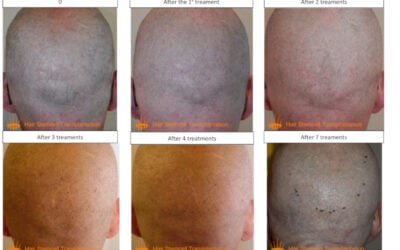
A major benefit is the preservation of the donor area. Because hair grows back at the extraction sites, more options remain available for future procedures or corrections. This is especially valuable for patients with a limited donor reserve or who want a discreet recovery. The donor area regenerates over the natural hair growth cycle of around nine months, and the extraction sites are generally very discreet.
The natural texture of the scalp is also preserved, leaving you free to change your hairstyle over time. For patients who want to secure their options in the long term, HST is a reassuring choice.
How does HST achieve dense, natural-looking results?
Implantation with even finer needles, 0.5 mm in diameter, allows grafts to be placed very close together, so surgeons can create dense, natural-looking hairlines and crowns. This precision also limits trauma to the grafts, which is important for their survival and for a natural blend with existing hair.
Patients who need correction after a previous procedure also benefit, as HST can fill gaps and cover irregularities, for a visibly improved result.
Choosing between FUE and HST
The right technique depends on several factors: donor density, any previous transplants, your aesthetic goals and your budget. Both FUE and HST are outpatient procedures, but only HST is designed to let the donor area regenerate.
For patients with a depleted donor area, who want maximum discretion or who want to keep future options open, HST is generally more suitable. In simpler cases, or when budget is a deciding factor, FUE may be considered, provided all the trade-offs are clearly understood and discussed.
- Density at the hairline and crown
- Visible scarring and recovery
- Long-term condition of the donor area
- Possibility of future corrections or sessions
Assessing these priorities with an expert helps ensure the chosen method fits both your current needs and your future plans. If you have any questions, feel free to contact our team.
Frequently asked questions about choosing between FUE and HST
Does HST really allow the donor area to grow back?
Yes. HST uses partial extraction of follicular units, leaving a stem-cell-rich portion in the donor area, which allows hair to grow back. Over around nine months, the donor area regenerates and future sessions remain possible. FUE, by contrast, removes entire follicular units, which do not grow back.
- Part of each follicular unit stays in place
- The donor area regenerates over the hair growth cycle
- Very discreet extraction sites
Which technique gives higher density and a more natural result?
HST allows grafts to be placed very close together with very fine 0.5 mm needles, following the natural direction of growth. This makes it particularly suitable for dense, natural-looking hairlines and crowns, and for corrective procedures.
- High-density implantation
- Natural blend with existing hair
- Well suited to detailed hairline work
How do FUE and HST compare in terms of scarring?
FUE leaves small round scars at each extraction site; when many grafts are taken, they can appear as a network of small dots. With HST, extraction sites are smaller and the donor area regenerates, so marks are generally very discreet once healed.
| Technique | Donor area scarring |
|---|---|
| FUE | Multiple small dotted scars |
| HST | Minimal, very discreet |
Who benefits most from HST?
Patients who have had previous transplants, those with a limited donor area, and those who want to preserve the natural look of their scalp benefit particularly from HST. It is also well suited to anyone who wants a discreet recovery or expects to need several procedures over time, since further sessions remain possible.
- Patients who want minimal scarring
- Complex or corrective cases
- Younger patients who want to keep options open