
Facing hair loss can be especially daunting when the donor area is limited or already scarred. Traditional approaches often reach their limits in these cases, which leads many patients to look for options that protect what remains of their donor hair while still achieving visible, natural-looking improvement. Hair Stem Cell Transplantation (HST), known in the scientific literature as PL-FUT (Partial Longitudinal Follicular Unit Transplantation), is one such option, and can offer new possibilities to patients who were considered unsuitable for standard procedures.
The limitations of traditional hair transplants
Classic methods such as Follicular Unit Extraction (FUE) and strip surgery (FUT) require harvesting a large number of follicles from the back and sides of the scalp, the so-called “safe zone” where hair usually stays dense for longer. For people with a sparse or damaged donor area, however, these techniques risk overharvesting, which can leave patchy areas and reduce overall coverage.
Beyond appearance, removing too many follicles reduces the reserve of donor hair available for future improvements or corrections. This creates a difficult trade-off between short-term gains and long-term sustainability, especially for patients with previous scarring or naturally low donor density.
How HST/PL-FUT addresses donor limitations
HST/PL-FUT changes the way a limited donor area can be managed. The technique limits trauma to the donor area and allows it to regenerate, making it possible to gain density without compromising future options. For those interested in the research behind it, several scientific studies on PubMed describe the PL-FUT technique.
What sets HST/PL-FUT apart?
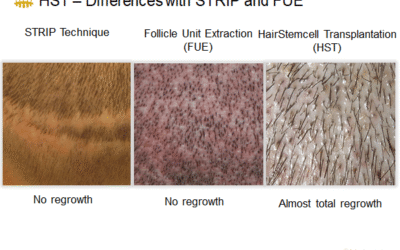
Unlike conventional techniques, HST/PL-FUT removes only a portion of each follicular unit instead of the whole unit, using very fine needles of just 0.6 mm in diameter. The part left in place allows the donor area to regrow hair over the natural growth cycle of around nine months, preserving its appearance and keeping further sessions possible if needed.
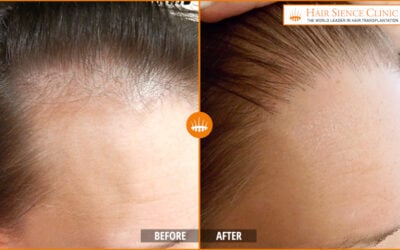
The technique also allows precise selection and placement of grafts, which is essential for key areas such as a dense hairline or the temples. Implantation is carried out with even finer 0.5 mm needles, so grafts can be placed very close together for a natural-looking result. If you are considering your options, you can book a personalized consultation to discuss your specific situation.
Why it suits limited or scarred donor areas
Because each extraction removes only part of a follicular unit, HST/PL-FUT does not use up the donor area the way FUE or FUT does. This makes it particularly well suited to patients whose donor reserve is already small, or who have had previous transplants.
HST/PL-FUT is also used for repair work, such as covering old scars, and for gradual improvements over several sessions. If you have questions or would like to learn more, do not hesitate to contact our team. The technique offers flexibility and preserves future options, adapting to each patient’s hair restoration journey.
Strategic planning for maximum impact
When working with a limited donor supply, every step must be carefully planned. Medical teams usually start with the front: recreating a natural hairline has the strongest visual impact and restores facial balance. Prioritizing these areas ensures the greatest aesthetic benefit from each graft.
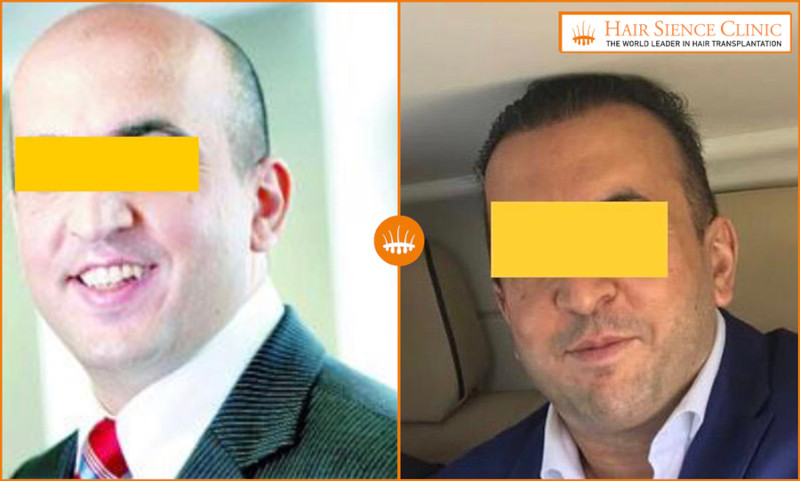
After the first procedure, regular assessments guide further improvements. Some patients benefit from treatment in several stages, gradually increasing density as the donor area regenerates. This step-by-step approach avoids depleting the donor supply too early and leads to more satisfying results over time.
- Start with the frontal hairline and temples for the greatest visual improvement
- Add further sessions as the donor area regenerates
- Adjust the plan according to individual healing and regrowth
Comparing donor preservation across methods
The risk of overharvesting is higher with methods that remove entire follicles. Although FUE is popular because it avoids a linear scar, repeated use on a limited donor area often leads to visible thinning, especially with short hairstyles.
By contrast, HST/PL-FUT focuses on protecting the health and appearance of the donor area. Its ability to let the donor area regenerate makes it valuable for complex repairs and for patients who want to keep future options open.
| Method | Donor regeneration | Visible scarring | Repeatability |
|---|---|---|---|
| Standard FUE | No | Possible if overharvested | Limited by donor depletion |
| Traditional FUT | No | Linear scar | Scarring accumulates with each session |
| HST/PL-FUT | Yes | Minimal | Allows further sessions |
Expert recommendations for patients with limited donor hair
When the donor area is limited, it is essential to choose a method that preserves it as much as possible while delivering natural, lasting improvement. Combining microsurgical precision with the regeneration of the donor area, HST/PL-FUT is particularly suited to complex repairs and gradual progress.
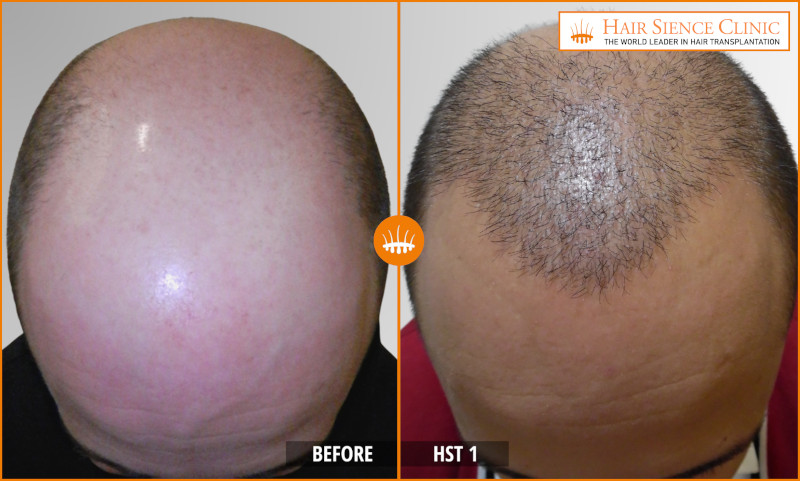
With careful planning and skilled execution, the transplanted hair can blend naturally with the original hair, and many patients can wear short hairstyles without revealing the procedure. This opens up new possibilities for people who once had few options.
Frequently asked questions about limited donor areas
Is a hair transplant possible with a very limited donor area?
In many cases, yes. HST/PL-FUT is designed to limit tissue damage and allow the donor area to regenerate, so the available follicles can be managed carefully. Whether it is suitable for you depends on a medical assessment of your donor area, which is carried out during the consultation.
How does HST allow hair to regrow in the donor area?
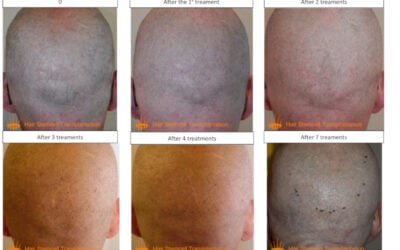
HST extracts only part of each follicular unit and leaves the rest, including stem cells, in place in the donor area. Over the natural hair growth cycle of around nine months, the donor area regenerates, while the extracted portions grow in the recipient area. This is what distinguishes HST from standard FUE or strip methods.
- Very small extraction sites (0.6 mm needles)
- The natural appearance of the donor area is preserved
- Further sessions remain possible
Will there be visible scarring after HST/PL-FUT?
HST/PL-FUT is designed to minimize scarring. The very fine instruments used leave very small marks, which are generally very discreet once healed, including with short haircuts. Unlike FUT, there is no strip removal and therefore no linear scar.
Which areas should be prioritized when donor supply is limited?
Specialists usually treat the frontal hairline and temples first, as these areas frame the face and have the greatest visual impact. Restoring them gives the best aesthetic result with fewer grafts. Further sessions can then treat the crown or other thinning areas, depending on your wishes and how the donor area regenerates.
- Frontal hairline
- Temples
- Crown or other thinning areas