
The search for truly discreet hair restoration has driven major progress in transplant techniques. Among them, the HST technique is often discussed, and many patients want to know whether it really works and how long the results last. While established methods such as FUE and FUT laid the foundations, hair stem cell transplantation is increasingly recognized for its natural-looking results and the preservation of the donor area. Where does this approach stand in terms of scientific evidence? By looking at the published research, the clinical protocol and the documented results, we can see what sets this regenerative approach apart.
The principles behind the HST method
The core of the HST (Hair Stem Cell Transplantation) method, known in the scientific literature as PL-FUT, is a regenerative principle rather than simple extraction and implantation. Unlike earlier procedures that often left visible traces, this technique aims to reproduce the natural growth and appearance of hair. Careful attention to the angle, direction and density of grafts is the basis for a very discreet result.
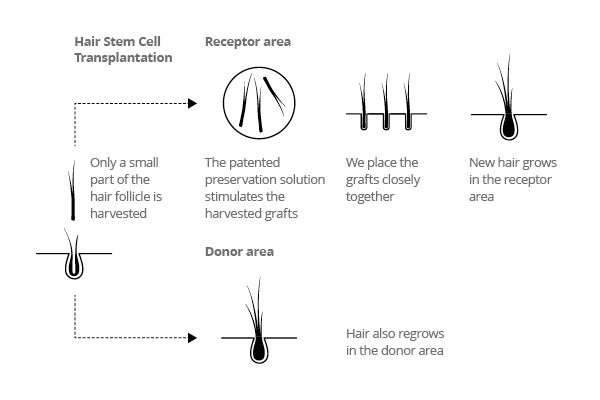
Instead of removing entire follicles from the donor area, only a portion of each follicular unit is extracted, using very fine needles of just 0.6 mm in diameter. The part left in place allows the donor area to regenerate, while the extracted part grows in the recipient area. This makes the procedure particularly suitable for patients with a limited donor area or who need correction after a previous transplant.
Evaluating clinical results and patient experience
Whether the HST technique keeps its promises can be assessed on two levels: the scientific literature on the PL-FUT technique, including several scientific studies on PubMed, and the results documented in patients who have had the procedure.
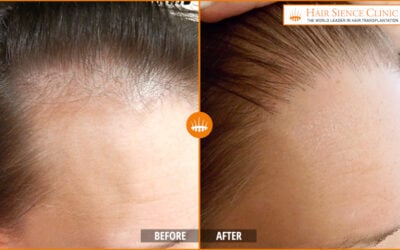
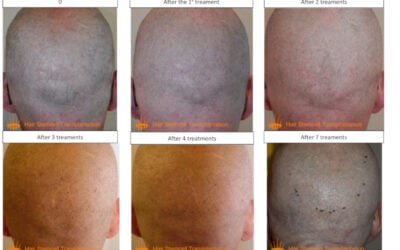
Objective evaluation is essential. Doctors document each case with photographs at several stages of recovery, alongside patient feedback during follow-up appointments. This makes it possible to measure progress based on visible improvement rather than impressions alone. If you are considering this procedure, you can book a personalized consultation to discuss your goals and expectations.
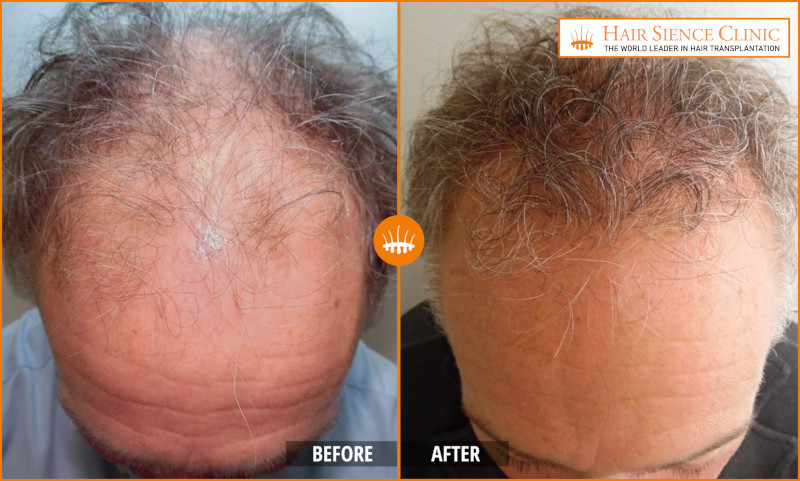
Donor and recipient area regrowth: what does the research say?
The main benefit described for this technique is the ability of the donor area to grow hair again after extraction. Because stem cell-rich tissue is left in place, the donor area regenerates over the natural hair growth cycle of around nine months and heals with very little visible change, unlike traditional techniques. Peer-reviewed publications on PL-FUT have reported this regrowth of the donor area after partial extraction.
The recipient area also benefits. Implantation with even finer 0.5 mm needles allows grafts to be placed very close together, and careful attention to their orientation gives a smooth transition between existing and transplanted hair, which matters greatly to patients who want a discreet result.
Refined hairlines and a wide range of applications
A key strength of HST is its ability to create delicate hairlines. Precise placement of each graft ensures that the hair follows natural contours, even in patients with fine or previously damaged hair.
This flexibility goes beyond cosmetic considerations. Patients whose donor area has been depleted by earlier treatments, or who need correction after an unsatisfactory procedure, may find new options with this regenerative technique. If you have questions about your suitability, do not hesitate to contact our team. Being able to use the donor area without compromising future options makes HST particularly attractive for long-term planning.
Patient satisfaction and long-term planning
A complete evaluation also takes the patient’s point of view into account. During follow-up appointments, the medical team asks about comfort, healing and the visual result. What matters most to patients is usually minimal scarring, the ability to wear short hairstyles and long-lasting, natural-looking results.
Careful management of the donor area is another key factor. Not every patient wants a single procedure, so preserving the donor area for possible future sessions is sensible. The conservative approach of HST supports gradual improvement while keeping options open for later touch-ups.
- Minimal visible scarring in the donor area
- Hair that closely follows natural growth patterns
- The donor area can be used again in future sessions
- Results documented through follow-up consultations and photos
HST compared with other hair transplant techniques
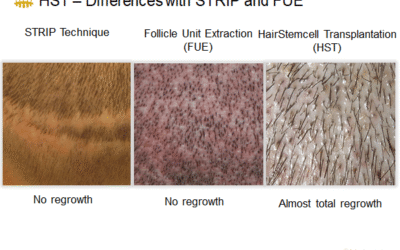
Comparing the main techniques helps explain why HST is seen as a significant advance. Strip surgery (FUT) is efficient but leaves a linear scar and requires a longer recovery. FUE, which removes individual follicular units, leaves smaller marks but permanently depletes the donor area.
HST stands out by combining regeneration of the donor area with aesthetic priorities. The tiny extraction sites heal very discreetly, which is compatible with short hairstyles once healing is complete. For repair work or limited donor areas, few alternatives offer the same versatility.
| Technique | Donor area regrowth | Scar visibility | Best suited for |
|---|---|---|---|
| FUT | No | Moderate to high | Large graft requirements |
| FUE | No | Low to moderate | Standard cases |
| HST | Yes | Minimal | All cases, including repair and limited donor areas |
Frequently asked questions about the evidence, visibility and suitability of HST
How does HST achieve such discreet healing?
Discretion comes mainly from very small, targeted extractions rather than the removal of entire follicles. Part of each follicular unit stays in place, so the donor area regenerates and heals with very little visible change.
- Less scarring than with FUT or FUE
- Short hairstyles are often possible once healed
What evidence is there that the donor area grows back?
Regrowth of the donor area after partial extraction of follicular units has been described in peer-reviewed publications on the PL-FUT technique, available on PubMed. It is explained by the preservation of part of each follicular unit, including its stem cells. In clinical practice, each patient’s progress is also documented with photographs at follow-up appointments.
- Peer-reviewed publications on PL-FUT
- Photographic follow-up of each case
| Timeframe | What to expect in the donor area |
|---|---|
| First weeks | Healing of the tiny extraction sites |
| Around 9 months | Regeneration over the natural hair growth cycle |
Who benefits most from the HST technique?
Patients with a limited donor area, complex hair loss patterns that require gradual transitions, or scars from previous procedures can achieve good results with HST. It is also well suited to anyone looking for a discreet solution. Because each follicular unit gives rise to two, the technique is also known as Hair Multiplication.
- Patients seeking repair after a previous transplant
- People who like very short haircuts
- Those who want to preserve their donor area
How does long-term planning work with HST?
The medical team can plan treatment in stages and allocate the available grafts carefully. Because the donor area regenerates after each session, further improvements remain possible years later. This balances immediate aesthetic goals with future needs, so the treatment plan can evolve with you.