
Conradus Chosal Gho, a Dutch physician and researcher, is one of the most well-known medical figures in the field of hair transplantation and stem cell research. He has dedicated his entire life to research and innovation in transplantation, with a single goal: to restore confidence to patients whose hair loss has taken away their peace of mind.
Hair Loss: Creates Psychological Suffering
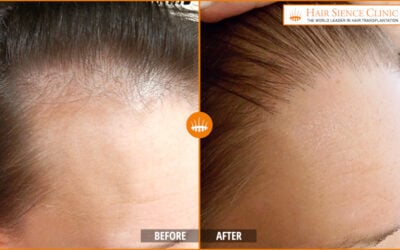
In fact, this is a well-known phenomenon affecting many patients following hair loss: a psychological state that haunts them every time they see their own reflection in the mirror. It has also been proven that a successful hair transplant has very beneficial effects on the mental well-being of patients who have had their hair restored. Moreover, hair restoration can sometimes be a true surgical reconstruction, for example in cases of burns or scars.
It is precisely from the hospital environment, in the case of burn reconstructions, that Dr. Gho comes. Since 1992, Gho has been involved in research in collaboration with universities and hospitals. He has pioneered the discovery of new therapies and treatment techniques in the field of hair-related conditions and burns, studying, among other things, new physiological concepts in cardiology, neurodegenerative diseases, and burn care.
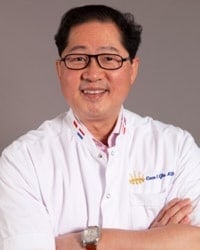
Dr. Gho, Researcher and Stem Cell Specialist
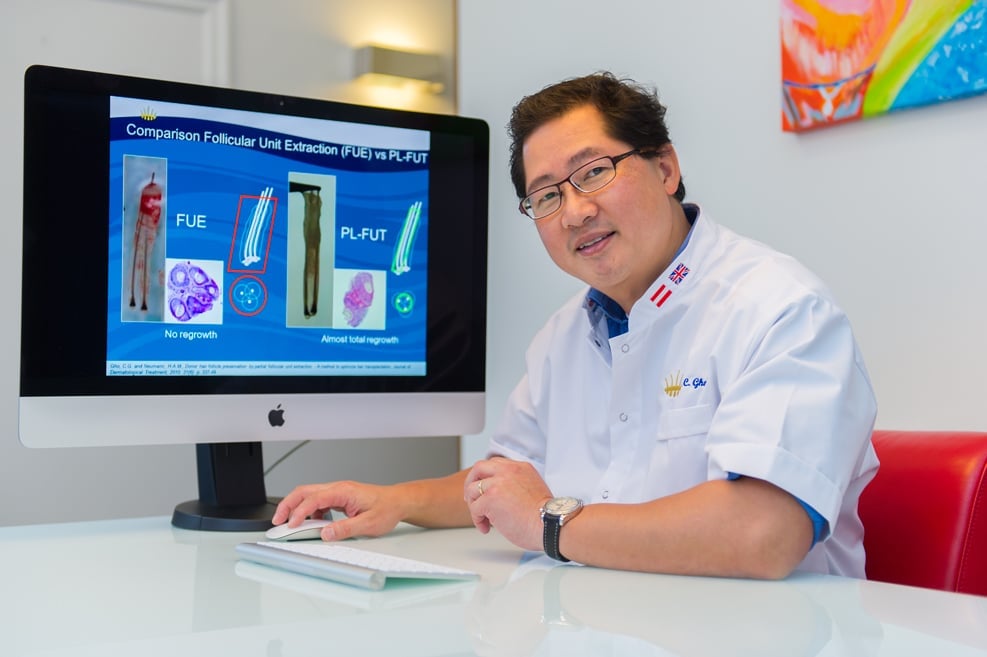
His studies, in collaboration with renowned academic figures such as Professor Martino Neumann, a dermatologist at the University of Rotterdam, led, in the specific field of hair restoration, to the discovery—supported by in vivo tests on patients—of the HST technique (Hair Science Institute), also known as PL – FUT (Partial Longitudinal Follicular Unit Transplantation).
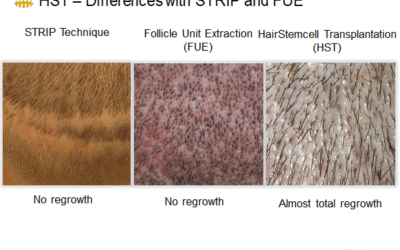
Unlike any other commonly practiced technique, with HST, only portions of follicular units are extracted from the donor area. Extremely small punches of 0.5/0.6 mm diameter are used for this procedure. This technique has proven extremely effective in treating androgenetic and scarring alopecia, as well as in beard and eyebrow restoration, with virtually no side effects, highly natural results, and most importantly, regeneration of the donor area. Dr. Gho patented this hair restoration technique, which, in addition to removing tiny punches from the donor area, involves immersing the grafts in a solution containing Bis oxovanadium maltolate (BMOV), which inhibits tyrosine phosphatase, prevents apoptosis (tissue death), and significantly improves the success of hair transplantation compared to Ringer’s lactate, which is merely a saline solution.
It is therefore not necessary, as Dr. Gho has demonstrated, to transplant an entire follicular unit to regenerate new hair, but only a portion of the follicular stem cells. Gho has conducted research on various follicular stem cells and their potential applications. He studied the location of follicular stem cells in whole follicular units and grafts, as well as the growth potential of partial follicular units containing follicular stem cells. Dr. Gho’s research has shown that a considerable portion of the follicular unit remains attached to the graft and can be used for follicular cell culture.
Sampling Portions of Follicular Units with HST Is Extremely Minimal
When a significant part of the follicular unit remains attached to the graft, transplanting such a graft does not produce normal hair growth compared to micrograft transplantation. The explanation for this phenomenon lies in the fact that the structures of the follicular units remaining in the donor area are necessary for hair growth. However, when cells derived from grafts are cultured, they can develop into epidermal tissue that can be used, for example, for skin grafts. This phenomenon has highlighted that the grafts themselves contain epidermal-type stem cells.
Recently, The Guardian published an interview with Dr. Gho. Given his reputation as a leading researcher in the field of hair transplantation, the Guardian journalist asked Dr. Gho how he views the future of hair transplantation and his impressions of the demand in this sector. Gho responded by citing the increasing psychological discomfort associated with hair loss. Today, everything focuses on appearance, photos on social media, and even professional images published on platforms like LinkedIn, and not looking youthful is considered a serious disadvantage by many.
Hair Transplantation Is Becoming Increasingly Relevant
Gho believes that today’s lifestyle choices and the accompanying psychological pressure contribute to the worries and insecurities that cause hair loss. There is strong awareness about personal appearance. Moreover, the later age at which people find a life partner is now often in the thirties, when male baldness is already advanced compared to the situation in their twenties.
Male baldness affects about 50% of men over the age of 50. Furthermore, all treatments currently used, such as Minoxidil and Finasteride, are minimally effective and have unpleasant side effects. In short, the issue is serious, significantly affects health, and should not be considered merely an aesthetic intervention but rather a treatment related to the mental well-being of those who suffer from it.