
Hair transplantation is now a popular topic. Everyone talks about it, everyone thinks they know about it. And the first thing they tell you is: I’m going to do it in Turkey. It is one of the most commonly performed surgical procedures. Just look on social media, and you immediately find groups of people with this common interest. On YouTube, several YouTubers talk about their experiences. But paradoxically, the more it is talked about, the less is really known, because everyone talks about the same things and truly important innovations struggle to stand out among all the identical discussions. The real problem with the internet is that the system favors information that has been online for a long time.
Hair transplantation has become commonplace
What is the best hair transplant in the world? This information is hard to find. Unfortunately, misinformation makes the public seek, without much thought, the lowest price for equivalent services. In this way, the most important thing is missed: knowing the best technique, which is different from all the others. Some have very extensive baldness and hope to solve the problem in a single operation. Those who research may only choose between FUT, also called strip, or FUE, which then comes under several commercial names that are just small variations of the same methodology. Unfortunately, none of these techniques will produce more hair. All these techniques only redistribute the existing hair over a larger area. Nothing more. And unfortunately, the public is not aware that it is possible to multiply their own hair.
 |
 |
Web research: often a disappointment
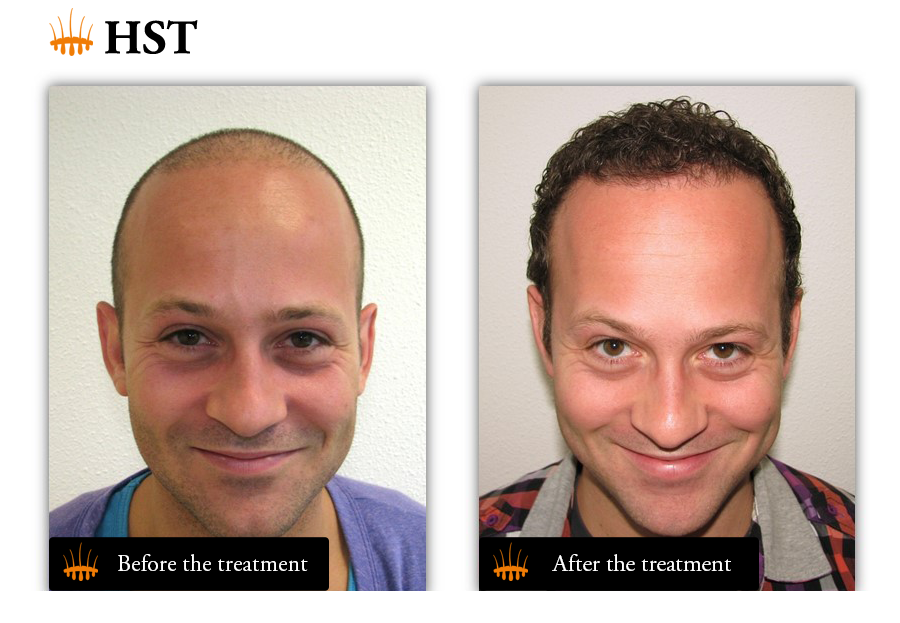
New information is hard to find: online data favors content that has been present for a long time rather than recent, more interesting updates. Often, searches focus on the best hair transplant in the world, insufficient donor area, with high expectations to regain a beautiful appearance that can restore self-confidence and the desire to look in the mirror. It is therefore difficult to find something different from what everyone already knows. Today, in Italy, Hair Stem Cell Transplantation (HST) is available — that is, hair stem cell transplantation. This hair transplant technique guarantees hair multiplication with an extremely natural final result, scientifically proven and published in major scientific journals. After the major European capitals — London, Amsterdam, Paris — Hair Science clinics are now open in Italy and Switzerland.
The famous Dutch researcher Coen GHO
Dr. Coen Gho, a globally renowned Dutch researcher, is the author of scientific publications in the most prestigious journals. Gho is the creator of the HST technique. After years of research, he published scientific articles and dedicated years of study to stem cells and tissue engineering. In collaboration with various universities worldwide, he studied the functioning of hair stem cells. He is the originator of the “Partial Longitudinal Follicular Unit Transplantation” patent, better known as Hair Stem Cell Transplantation (HST).
Hair stem cells
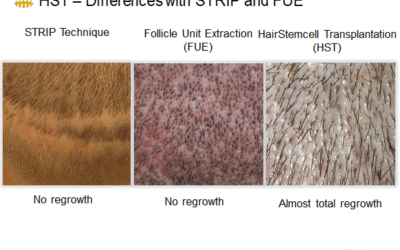
The transplant, according to the Hair Stem Cell Transplantation patent, is based on the regenerative energy of nature and the human stem cells’ ability to regenerate. Only a small part of the follicles is taken from the donor area’s hair bulbs, instead of the entire follicle as in FUE. This partial harvesting contains enough stem cells to generate new hair growth in the recipient area. Nature, when well understood, helps us achieve miracles: from a single graft, leveraging the regenerative capabilities of hair stem cells, a multiplied number of hairs grow. The new grafts transplanted are microscopic in size and closely spaced, creating a very high density with an entirely natural appearance. The growth capacity of the grafts is due to a patented preservation solution that provides strength and vitality to the grafts. The bulb from which the graft was taken will regrow the same hair that was removed. Hair is thus multiplied.
Results obtained with HST hair transplant
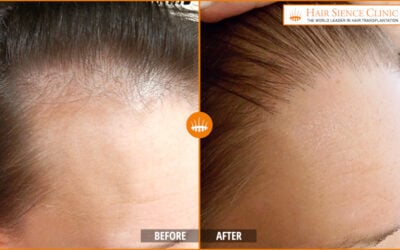
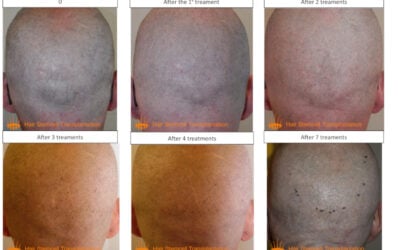
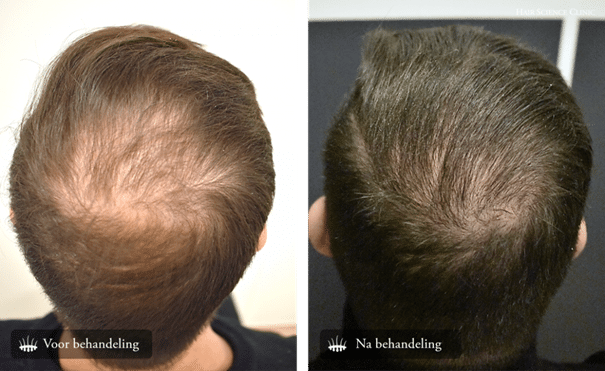
The method is scientifically proven effective. It does not create scars, the hair density achieved is extremely high, and the final result is entirely natural. In hair stem cell clinics, medical standards are incomparably high: surgery is performed in an operating room, and the patient is treated under the safest and most sterile conditions. Bandages are unnecessary, as there is no bleeding. There are no post-operative side effects. After a few months, if needed, another procedure can be considered once the donor area has fully regrown.
The HST method
The results obtained with a hair stem cell transplant, using the HST method, are incomparable, and no traditional transplantation technique achieves the same result. One hair care clinic cannot be compared to another. The HST method is scientifically called “Partial Longitudinal Follicular Unit Transplantation (PL-FUT)” but is known as Hair Stem Cell Transplantation.
HST revolutionizes hair transplantation
A portion of the hair follicle is removed with the hair stem cell transplantation (HST), while another group of stem cells remains in the donor area. A needle 33% smaller than the smallest needle used in FUE is used for extraction. The grafts are therefore much finer than those used in conventional hair transplant techniques. This achieves a high hair density and a very natural appearance with a perfect hairline. The remaining stem cells in the non-extracted bulb portion are responsible for new hair growth within a few weeks. The regrown hair is of the same quality and structure as the removed hair. The final result is achieved after a nine-month growth cycle.
In men
Hair loss is often the cause of psychological issues, frequently occurring in young men. There is always a chance to resolve hair loss problems whether the hair is thinning, the hairline has receded, if bald patches are present, or if there are small areas in the beard. The first step is to evaluate the stage of baldness and the condition of the donor area. Whether it is hereditary baldness or caused by other factors, a correct diagnosis is essential.
VISIBLE RESULTS IN A FEW MONTHS
The result of an HST treatment is permanent. Grafts taken from hair follicles produce hair for the rest of the patient’s life. The result is not immediate; it takes time to achieve the desired effect. Hair follicles need time to consolidate, which varies from person to person. After 3–4 months of treatment, the transplanted follicles start producing new hair. The final result is achieved between nine and twelve months.