
For people experiencing hair loss, choosing a hair transplant technique can feel like finding your way through a maze of options. The field has moved well beyond early procedures, with newer methods offering more natural results and better long-term prospects. Comparing established approaches with the most recent advances makes it easier to set clear expectations and find a solution suited to lasting hair restoration.
Traditional hair transplant techniques: what sets them apart?
In surgical hair restoration, two classic techniques, FUT and FUE, have been widely used for many years. Each has its own characteristics, so it is important to understand how they differ before considering newer options.
These well-established procedures remain popular because they are reliable and have proven results. However, they affect the donor area and the recipient area of the scalp in quite different ways.
How does FUT differ from FUE?
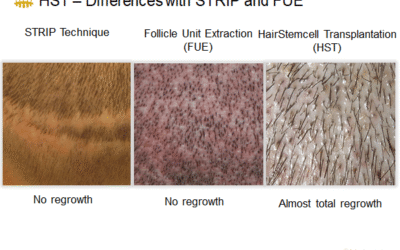
The first widely adopted method is FUT (Follicular Unit Transplantation), also known as the strip method. A thin strip of scalp is removed, usually from the back of the head, and divided into grafts that are transplanted into thinning areas. This provides a large number of grafts in one session, but leaves a linear scar in the donor area, which may be visible with short hair.
FUE (Follicular Unit Extraction), by contrast, removes follicular units one by one using fine punches. This avoids a large scar but leaves many small dotted marks across the donor area. Because the removed follicles do not grow back, donor density gradually decreases, and repeated sessions can deplete the donor supply over time.
DHI, a variant of FUE
Direct Hair Implantation (DHI) is a development of the FUE method. Instead of making incisions before placing the grafts, surgeons use special implanter pens to insert them directly into the recipient area. This can improve precision in positioning each graft, but extraction is still carried out with the standard FUE method: once the grafts have been removed, the donor area does not regenerate them.
Although FUT, FUE and DHI are based on similar principles, their technical differences influence scarring, the overall appearance and the possibility of future transplants.
HST PL-FUT: what makes it different?
Among newer procedures, HST, known in the scientific literature as PL-FUT, stands out for its regenerative approach. Unlike conventional techniques, it removes only part of each follicular unit instead of the whole unit. The key innovation of HST is the preservation of stem cells, which changes what is possible for the donor area. For those interested in the research behind it, several scientific studies on PubMed describe the technique.
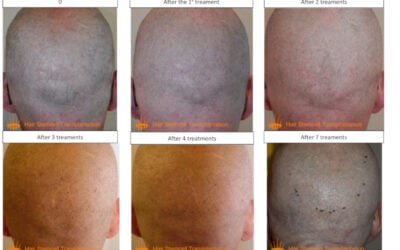
The principle is that the part of each follicular unit left in place retains stem cells capable of producing new hair at the original site. At the same time, the transplanted portion grows in the recipient area. Over time, hair grows in both areas without exhausting the donor supply.
Donor area recovery and density
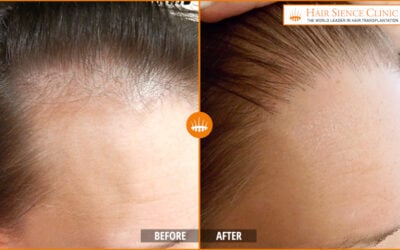
Unlike older techniques, HST makes it possible to preserve density in the donor area. The donor area regenerates over around nine months, the length of the natural hair growth cycle, and generally regains a very natural appearance. Suitable patients can also consider further sessions, as their donor reserve is preserved for future needs.
The technique is also minimally invasive. Extraction is carried out with very fine 0.6 mm needles, and implantation with even finer 0.5 mm needles, which allows grafts to be placed very close together for a natural result that blends with existing hair. If you would like to discuss your options, you can book a personalized consultation.
At a glance: the main differences
Modern hair transplantation aims not only to cover thinning areas but also to keep future options open. This comparison summarizes the differences in extraction method, effect on the donor area and possibility of further sessions:
| Technique | Extraction method | Effect on the donor area | Natural appearance | Further sessions |
|---|---|---|---|---|
| FUT | Strip removal | Linear scar, no regrowth | Good, but risk of a visible scar | Limited after one session |
| FUE/DHI | Individual follicular units (implanter pens for DHI) | Dotted scars, reduced density over time | High when performed by an expert | Limited by donor depletion |
| HST PL-FUT | Partial follicular units, stem cells preserved | Regenerates over around 9 months | Very natural, dense result | Further sessions possible |
Key factors when choosing a hair transplant technique
Every patient’s hair is unique, so choosing the right technique for your situation is essential. Age, the extent and pattern of hair loss, donor hair quality and your personal preferences all play a role.
Careful management of the donor area is particularly important. Traditional methods gradually reduce the available hair, which can limit future corrections or sessions. Anyone considering a hair transplant should discuss not only the expected result in the recipient area, but also the long-term effect on the donor area, with their surgeon. If you have any questions, feel free to contact our team.
- A long-lasting, natural appearance matters more than the initial cost alone.
- Being able to have several sessions without damaging the scalp is essential when hair loss is progressive.
- Knowing the risks of the procedure in advance helps set realistic expectations.
- Choosing a clinic that prioritizes donor area preservation can avoid disappointment later.
Frequently asked questions about hair transplant techniques
Does FUE always cause permanent damage to the donor area?
FUE removes entire follicular units, leaving many tiny dotted scars across the donor area. These small wounds heal, but the removed follicles do not grow back. After several sessions, visible thinning or reduced density can develop, especially if too many grafts are taken at once.
- Avoiding overharvesting helps preserve the cosmetic result.
- Careful planning and limiting the number of extractions per session protect long-term options.
How does HST allow the donor area to regenerate?
Instead of removing the whole unit, HST divides the follicular unit. The part left in the donor area, which contains stem cells, allows hair to grow back over the following months. This preserves density and reduces the risk of visible thinning, even after several sessions.
- Partial extraction leaves stem cells in place.
- Hair grows in both the donor and recipient areas.
- The donor area regenerates gradually, over around nine months.
Why are some patients dissatisfied after FUE?
Some patients report reduced density, visible dotted scars or insufficient coverage after poorly planned FUE procedures. Overharvesting, inaccurate estimates or a lack of transparency can leave the donor area depleted and the result in the recipient area disappointing. Openly discussing the limits of the donor area during the consultation is essential.
- Patients may lose the option of corrective or follow-up sessions.
- Further procedures may become impossible if the donor area is exhausted.
Which technique allows grafts to be placed closest together for a natural result?
HST uses very fine needles, 0.5 mm in diameter for implantation, which allows grafts to be placed closer together. This precision lets surgeons create hairlines and coverage that closely reproduce natural density and blend with existing hair.
| Method | Graft spacing | Visual effect |
|---|---|---|
| FUT/FUE | Standard | Natural, less dense |
| HST | Very fine needles, close placement | High density, natural blend |