

Hair loss
To know if hair transplantation is the right solution for you,
it is important to understand what exactly hair loss is.
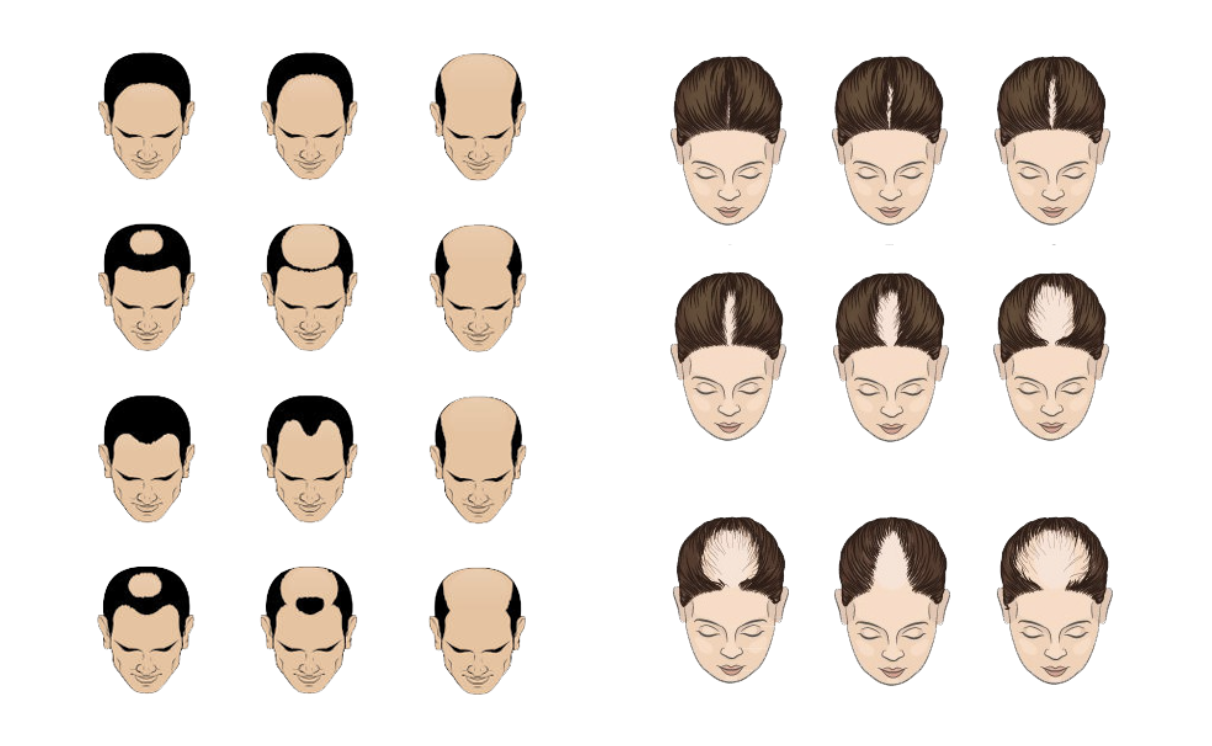
What does hair loss really mean? What causes hair loss?
Is there a difference in hair loss between men and women?
Procedure price
Estimated cost of the procedurePersonalised quote after consultation
Price of the procedure
The cost of the HST (PL-FUT) «Hair Stem Cell Transplantation» procedure is approximately €9,500. This one-of-a-kind technique has nothing to do with FUT or FUE methods, which “consume” the donor area.
HST preserves the donor area (repeat sessions are possible).
A personalized quote will be provided after a consultation (online is sufficient) to explain the technical aspects and determine the price of your procedure.
If your main criterion is price, this procedure is not for you.
For multiple treatments, progressive pricing may apply to subsequent procedures, according to the established treatment plan.

Understanding how hair works and hair loss
The scalp contains tens of thousands of follicular units: “little factories” that continuously produce hair. The average number of follicular units on the scalp is about one hundred thousand and is genetically determined. People with blond hair generally have more follicular units than people with brown hair. The follicular units are covered with soft collagen and develop in a cycle of three phases: growth (anagen), regression (catagen), and rest (telogen). When you lose your hair, the follicular units go into standby mode (ketogenic). In a period of time that varies from two to twelve months, the follicular units become active again and the cycle starts again.
The normal hair growth cycle usually lasts from two to five years and follows three stages: first, the hair grows actively, then there is a resting period, and then the hair falls out. Normally excessive hair loss occurs when the growth phase is too short. Although there are many causes and diseases that cause hair loss, androgenic alopecia is the most common cause for both men and women.
Is hair loss a source of suffering?
During the normal aging process, our hair becomes thinner and less dense.
The influence of male hormones in men and women plays an important role and this explains why very few people over the age of 75 have a dense head of hair.
Our hair becomes thinner and less dense during the normal aging process. The influence of male hormones in both men and women plays an important role and helps explain why very few people over the age of 75 have a full head of hair. That said, male-pattern hair loss (androgenetic alopecia) occurs in both men and women. When this phenomenon occurs at a young age, it is known as premature baldness. People who suffer from this form of hair loss are ideal candidates for a transplant. Since baldness can worsen over the years, we advise our younger clients to delay treatment to ensure the best possible results.
Baldness and personal health
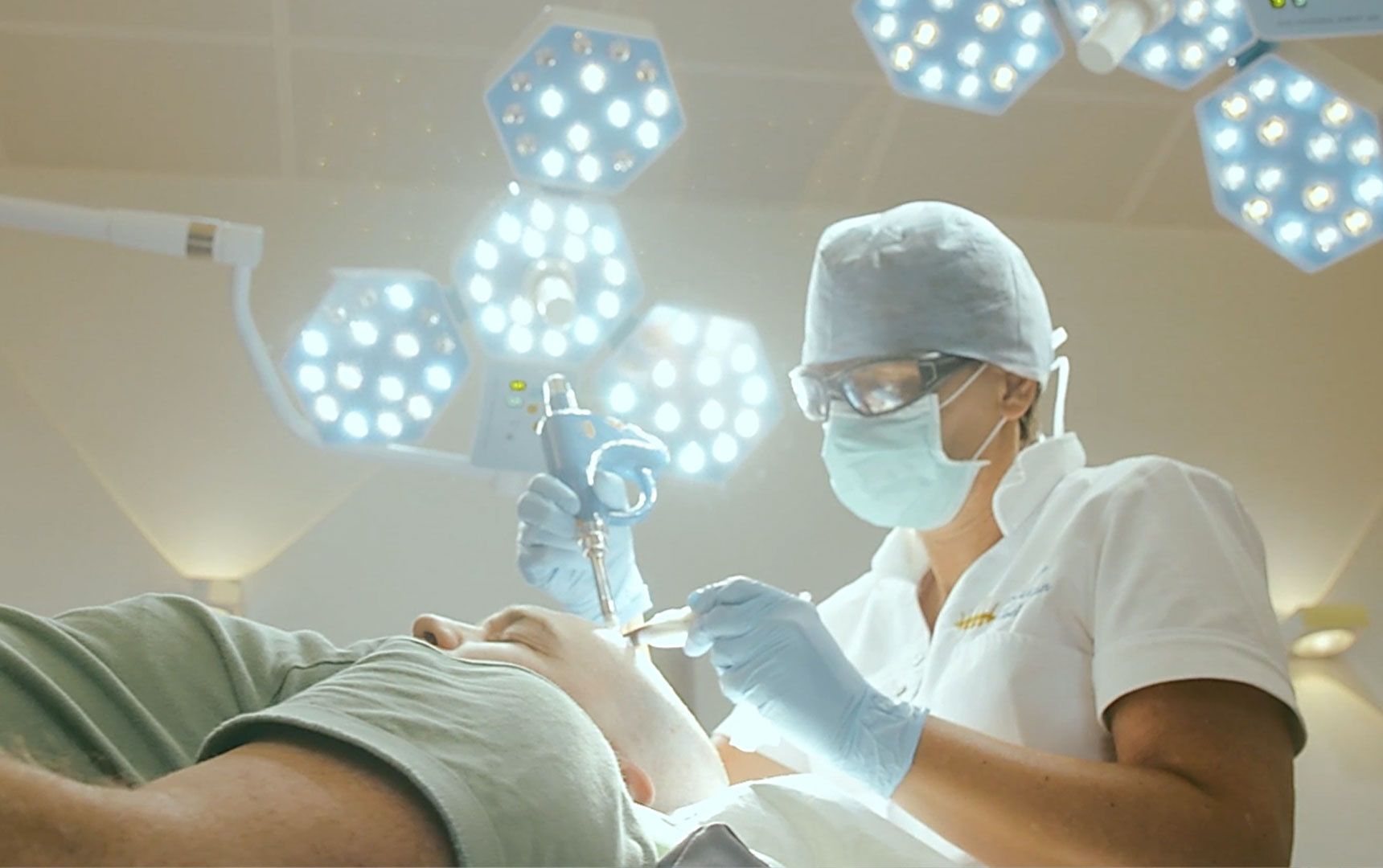
Being bald is not good for our health. Studies have shown that bald men are eight times more likely to develop skin cancer than men with a full head of hair. For this reason alone, covering bald areas during a hair transplant can be clinically beneficial. The method of partial longitudinal follicular unit extraction, also called Hair Stem Cell Transplant (HST), is an innovative hair transplant technique developed by Dr. Coen Gho. It involves extracting parts of hair follicles using very small needles (diameter 0.5–0.6 mm and length 5–6 mm).
Research shows that only a part of the hair follicle is sufficient to produce one or more hairs. This is because stem cells are present both in the tissue (graft) used for the transplant and in the tissue left in the “donor” area. This results in new hair growth of the same quality in both the donor and recipient areas. It is a unique method, thanks to its combination with a specially developed and patented medium that ensures the vitality of the grafts and provides the proper stimulation to the stem cells for growth. This technology is available only at the Hair Science Institute.